
This is for anyone in the Hudson Valley with a piano that has to go somewhere: to a new house, across town, or out to a relative. It covers what the crew looks at, why the first thing we ask about is stairs, and how a piano move is priced.
Why the first question is about stairs
On a level floor with a clear path, a piano is heavy but manageable. It sits on a dolly and rolls. The hard part of almost every piano move is the change in height between where it is and where the truck is.
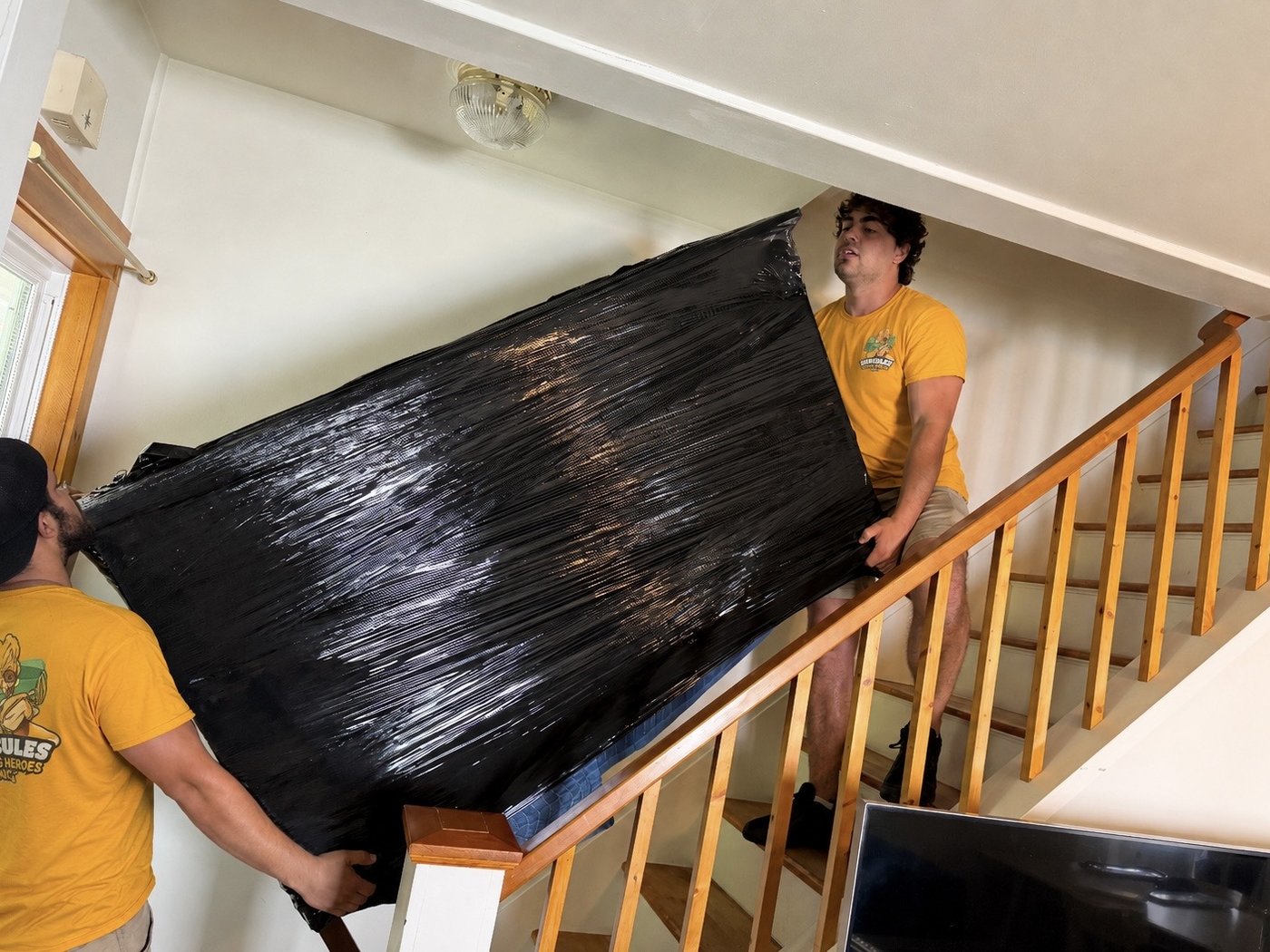
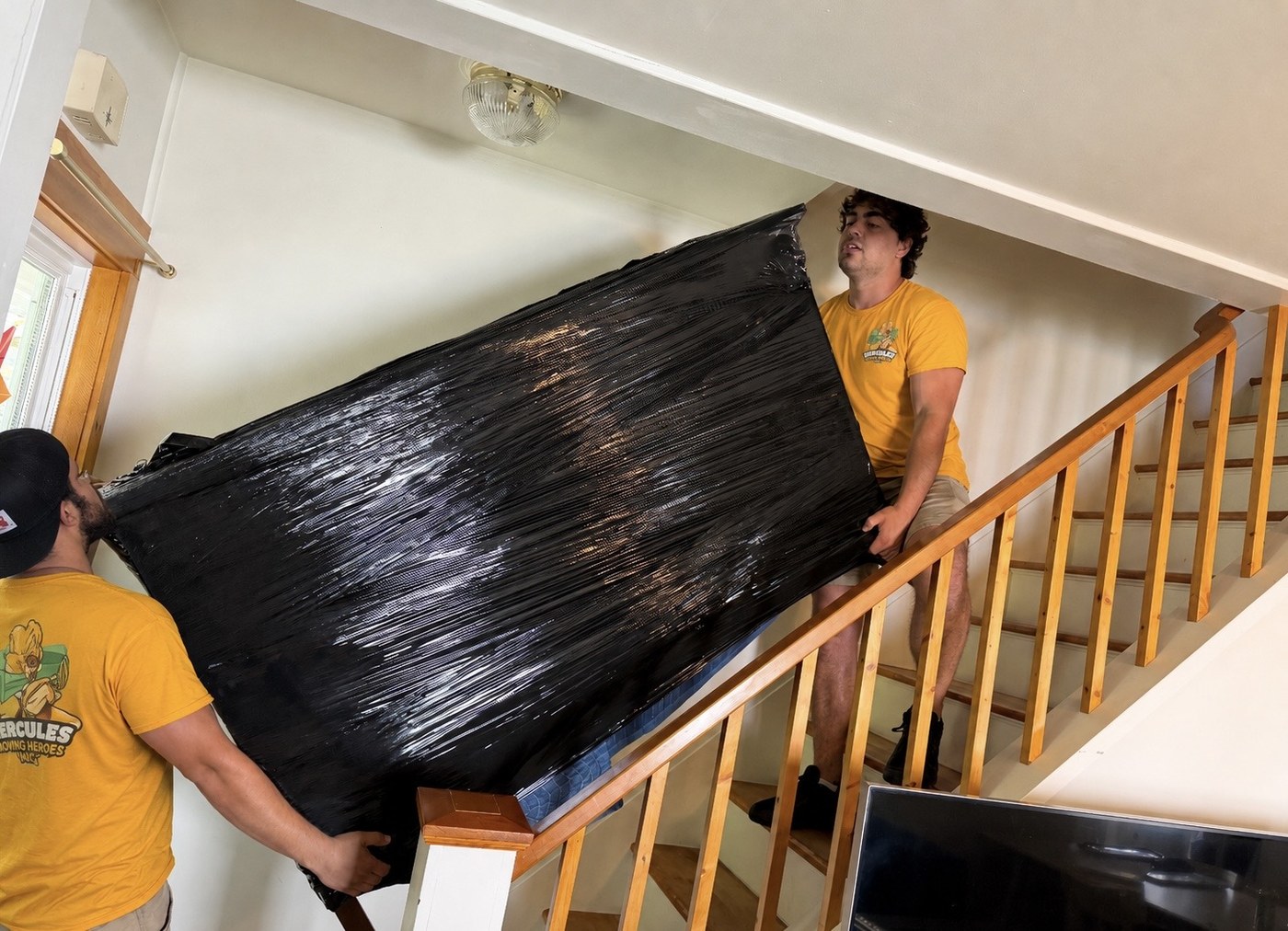
On a staircase the weight cannot roll. It has to be carried and controlled one step at a time, with people below it taking the load and people above it steadying it. A straight run of stairs is one job. A staircase that turns at a landing, or a narrow one with a low ceiling at the top, is a different one. So before anything else we want to know:
- Are there stairs at either end, and if so, how many flights.
- Does the staircase turn, and is there a landing.
- How wide are the stairs and the doorways the piano has to pass through.
- Are there outside steps: a porch, a stoop, a walkway that drops to the driveway.
Outside steps get missed more than inside ones. A second-floor walk-up in Kingston is obvious. Three stone steps down from a porch in Saugerties or Catskill are easy to forget, and they change the plan just as much.
The next question is how close the truck can park. A long carry across a lawn or up a gravel drive, which is common on houses outside Hudson and up in the hills, adds time and sometimes a person.
What the crew looks at before anything moves
The rule on our specialty item page is that we assess before we move: the item, the space it is coming out of, the path to the truck, and the destination. For a piano that means a few specific things.
The type of piano. We move uprights, baby grands and grands. An upright usually travels standing, strapped to a dolly. A grand or baby grand is a different shape of job: the legs and the pedal assembly come off, and the body goes on its side on a padded board before it is wrapped and moved.
The path out. Every doorway, hallway corner and step between the piano and the truck. A tight turn is the usual reason a door comes off its hinges for a few minutes.
The destination. Where the piano is going in the new room, which floor it is on, and whether the path in has the same problems as the path out. Knowing which wall it goes against means it is set down once, in the right place.
What the crew brings
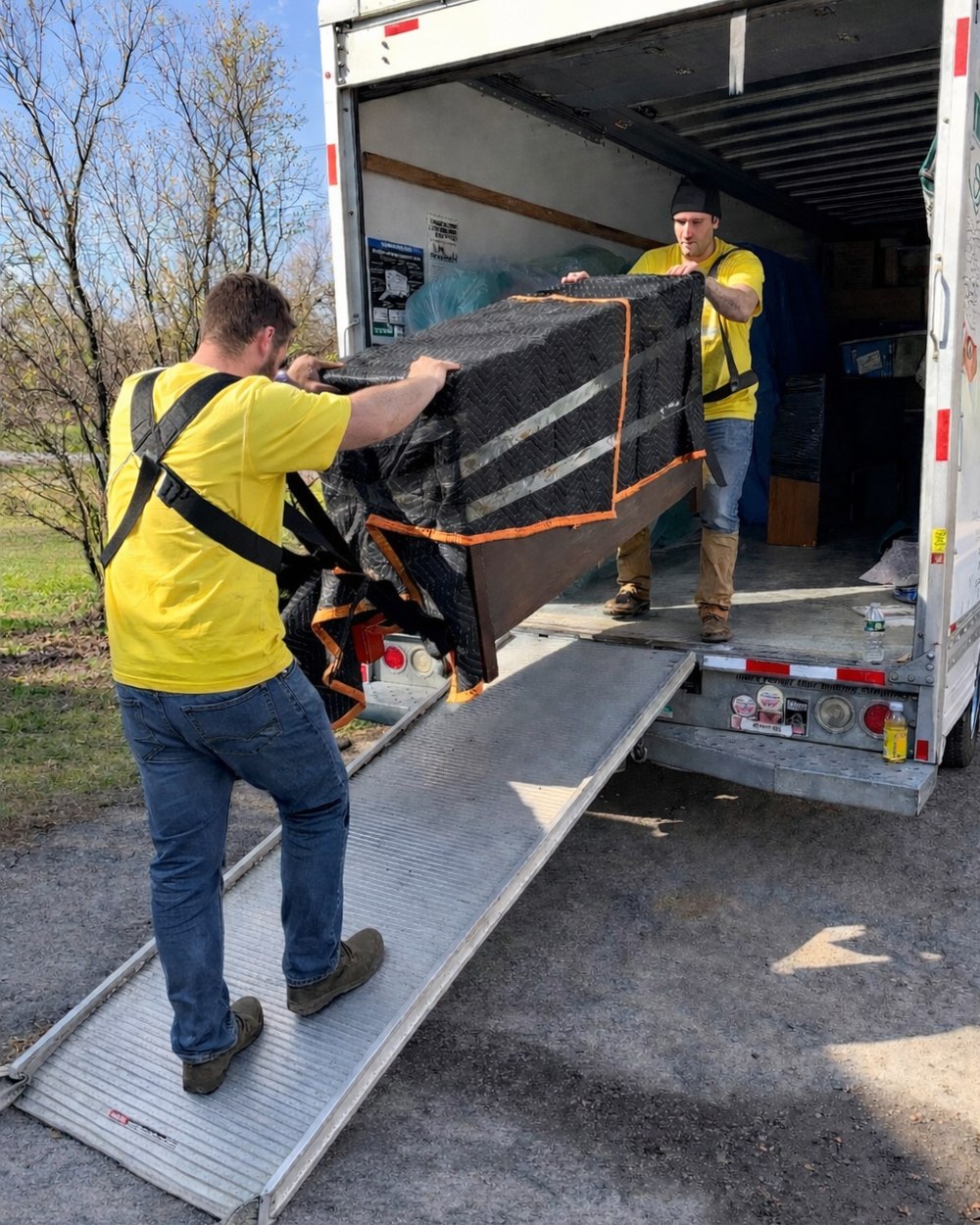
Specialty items are not a job to improvise. The crew arrives with furniture dollies, heavy duty straps, stair climbers, floor protection and moving blankets. The piano is padded on every face and then wrapped in stretch film pulled tight, so the pads stay where they are when the piano is tipped or carried.
We staff the job for what you have told us. A piano on a ground floor with a short path to the truck needs a different crew than one coming down a turning staircase. That is why the questions come first: so the right number of people show up, and nobody is paid to stand around.
One thing a moving crew does not do is tuning. A piano almost always needs a tuner after it moves, because the change of room and the handling shift it. Plan to call a tuner once it has settled in its new spot for a while.
How a piano move is priced
There are two cases, and they are priced differently.
The piano on its own. If the piano is the only thing moving, it is a single item. Single items are priced on their own, agreed up front, and not held to the three-hour minimum that applies to hourly moves. You tell us the piano, where it is, where it is going, and what is in the way, and you get one price before the day.
The piano as part of a full move. If the piano goes with the rest of the house, it is part of the hourly job. Our rates are published: 2 movers at $200 an hour, 3 movers at $280, 4 movers at $350, with a three-hour minimum. The crew size is set by the heaviest thing on the job, so a piano with stairs may mean a bigger crew than the rest of the house would need on its own.
If you are only moving the piano, do not book a full crew by the hour to do it. The single-item price is built for exactly that case and will usually serve you better.
What helps before moving day
- Tell us about every step, inside and out, at both ends.
- Measure the narrowest doorway on the path if you can.
- Clear the top of the piano and the bench, and empty the bench.
- Move rugs, plants and small furniture out of the path.
- Leave the piano where it is. Shifting it to a different room first only adds a second move.
A photo of the piano and a photo of the stairs say more than a long description, and they let us size the crew correctly the first time.
If a piano is the only thing you need moved, choose "One item" and then "Piano" on the estimator, describe the path, and we will come back with a price.